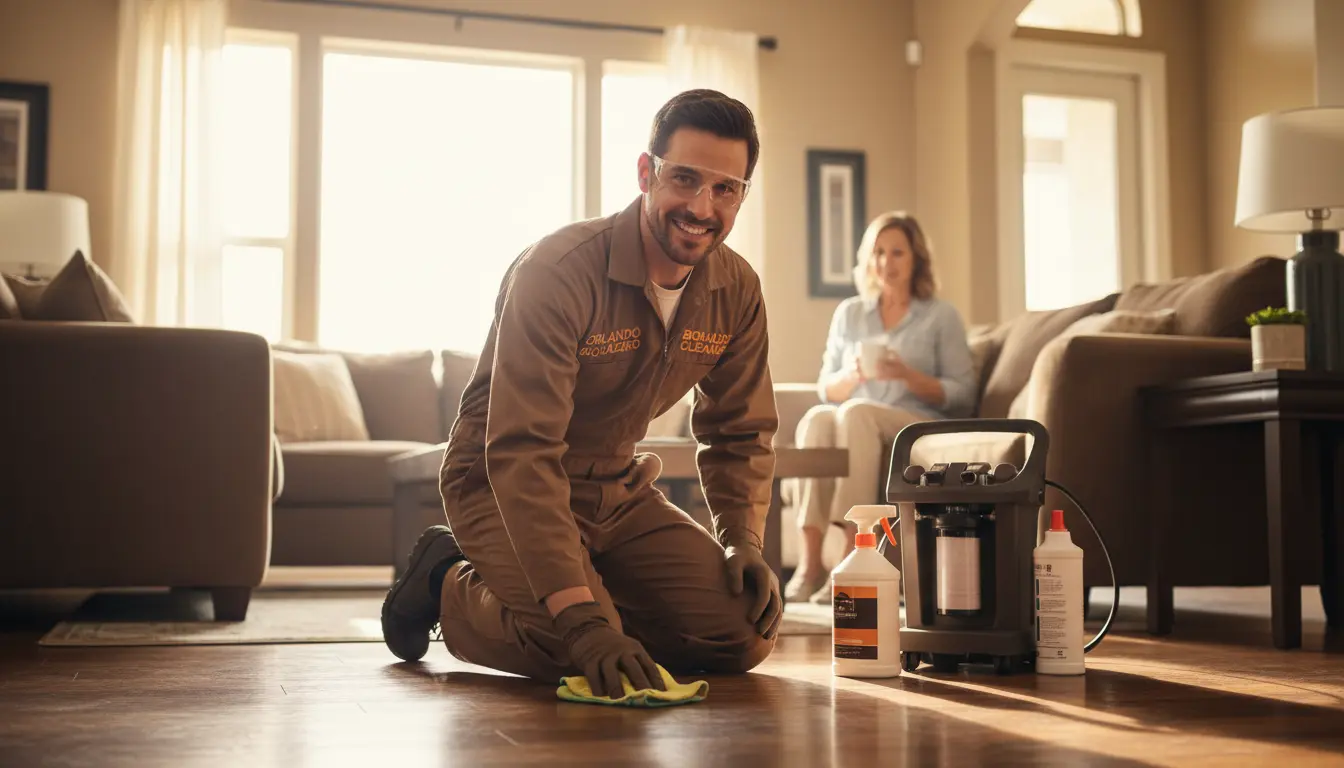
Most people assume that a strong bleach solution and a pair of rubber gloves are all you need to clean up a biohazard scene. That assumption is not only wrong—it is dangerously irresponsible. In Orlando, where subtropical humidity accelerates biological decomposition and pathogens thrive, relying on household supplies can turn a contained incident into a long-term health crisis. The truth is that proper biohazard remediation demands a suite of specialized equipment designed to meet OSHA, EPA, and IICRC S540 standards. Without it, you risk spreading contaminants, exposing yourself to bloodborne pathogens, and leaving behind invisible hazards that can sicken future occupants.
Understanding why specialized equipment is necessary for biohazard remediation starts with acknowledging the complexity of biological waste. Human blood, tissue, and other potentially infectious materials contain viruses like hepatitis B, hepatitis C, and HIV that can survive on surfaces for days or weeks. Standard cleaning tools simply cannot eliminate these threats at the molecular level. In Orlando’s climate, warm temperatures and high humidity create ideal conditions for bacterial growth and odor migration, making thorough decontamination even more critical. This is why professional services like Orlando Biohazard Cleanup invest in industrial-grade equipment and rigorous training—to ensure every site is restored to a safe, habitable condition.
The Technical Process Behind Professional Biohazard Remediation
Professional remediation follows a strict step-by-step workflow that begins long before any cleaning solution touches a surface. The first step is a comprehensive risk assessment, where technicians evaluate the type and extent of biohazardous material, the affected surface materials, and potential airborne contamination. This assessment determines the level of personal protective equipment (PPE) required, which can range from disposable gloves and gowns to full-face respirators and Tyvek suits. In Orlando, where many homes use porous materials like drywall and unsealed concrete, the assessment must also account for fluid penetration into subfloors and wall cavities.
Once the assessment is complete, the team sets up containment barriers and negative air pressure systems. Industrial-grade negative air machines, equipped with HEPA filters, create a vacuum that pulls airborne particles away from clean areas and exhausts them outside after filtration. This step is non-negotiable for preventing cross-contamination during active cleanup. Next, physical removal of all biohazardous waste occurs—blood-soaked carpet, contaminated drywall, and any porous items that cannot be effectively sanitized are cut out and double-bagged for incineration. Only after gross contamination is removed do technicians apply EPA-registered hospital-grade disinfectants using electrostatic sprayers or fogging devices that ensure complete coverage of every surface, including hard-to-reach crevices.
The final stage involves verification testing using adenosine triphosphate (ATP) fluorescence technology. ATP testing measures the presence of organic material on surfaces; a reading below a certain threshold confirms that the area is biologically clean. For trauma scenes, structural encapsulation may be required—applying specialized sealants to exposed subfloors or framing to lock in any remaining microscopic contaminants. This entire process relies on specialized equipment that simply has no equivalent in a standard cleaning kit. Without it, property owners risk leaving behind pathogens that can cause chronic illness or legal liability.
Data Comparison: Professional Remediation vs. Standard Janitorial Cleaning
The differences between professional biohazard remediation and typical residential cleaning are stark. The table below highlights key metrics that demonstrate why specialized equipment is necessary for biohazard remediation.
| Feature/Metric | Professional Biohazard Remediation | Standard Residential Cleaning |
|---|---|---|
| Regulatory Compliance | OSHA 29 CFR 1910.1030, EPA guidelines, IICRC S540, DOT hazardous waste transport | No regulatory oversight for biohazards |
| Pathogen Elimination | 99.99% kill rate using EPA-registered hospital-grade disinfectants, ATP-verified | Household bleach (5-10% sodium hypochlorite) may not inactivate all bloodborne pathogens |
| Structural Assessment | Moisture meters, thermal imaging, and borescopes to detect hidden seepage | Visual inspection only—misses contamination behind walls |
| Containment | Negative air machines, HEPA filtration, plastic sheeting barriers | No containment—airborne particles spread to other rooms |
| Waste Disposal | Biohazard bags, sharps containers, licensed medical waste hauler | Regular trash—illegal and dangerous |
This comparison makes it clear that standard cleaning methods are not just inadequate—they are unsafe. In Orlando, where humidity can cause biological fluids to wick into drywall and wood within hours, a visual-only approach is a recipe for hidden contamination that can produce odors and health risks months later.
Expert Insights: Advanced Diagnostic Tips and Common Mistakes
Three Diagnostic Tips Professionals Use
First, always check for biological seepage in porous materials using a moisture meter. Even if a surface looks dry, fluids can travel along studs and under baseboards. In Orlando’s common concrete block construction, blood can pool in hollow cores and remain undetected without specialized tools. Second, understand that porous materials like carpet pad, upholstery, and unsealed grout must be removed and replaced rather than cleaned. No amount of disinfectant can fully penetrate these materials, and trapped organic matter will decompose and release volatile organic compounds. Third, always establish negative pressure before beginning physical removal. Without it, every swipe of a sponge or cut of a saw can aerosolize pathogens into the HVAC system, contaminating the entire property.
Common Mistakes Property Owners Make
One frequent error is using household bleach on biological matter. While bleach is a disinfectant, it loses efficacy in the presence of organic soil and can even fix proteins to surfaces, making them harder to remove. Another mistake is waiting for odors to dissipate naturally. In Orlando’s heat, decomposition accelerates, and odors from blood or tissue can permeate drywall, flooring, and insulation within 24 hours. Waiting only increases the scope of remediation and cost. Finally, allowing untrained personnel—family members, friends, or general contractors—into the site without proper PPE and training exposes them to bloodborne pathogens and creates legal liability. Professional remediation teams follow strict protocols to protect everyone involved.
Pricing Structures for Biohazard Remediation in Orlando
Biohazard remediation costs vary based on several factors, but understanding typical pricing helps property owners budget appropriately. Most professional companies charge a standard site mobilization fee that covers the cost of bringing equipment, PPE, and trained technicians to the location. This fee often ranges from $300 to $600 for a typical residential call within Orlando city limits. Hourly remediation rates for trauma or crime scene cleanup typically fall between $150 and $300 per technician, with a minimum of two to three technicians required for safety and efficiency.
- Site inspection and assessment: often included in mobilization, but complex scenes may require a separate fee.
- Removal and disposal of biohazardous waste: charged by weight or volume, typically $2 to $5 per pound for regulated medical waste incineration.
- Structural material replacement: replacing drywall, flooring, or insulation can add $500 to $5,000 depending on the extent of damage.
- HVAC decontamination: if the HVAC system was exposed, cleaning ducts and replacing filters may cost $500 to $2,000.
Three major factors that influence cost are the extent of structural material replacement required, the total volume of biohazardous waste, and the necessity for specialized HVAC decontamination. In Orlando, where many homes have central air systems that recirculate air, HVAC contamination is a common concern that must be addressed to prevent recurring odors and health issues.
Safety Standards and Certifications
Professional biohazard remediation companies in Orlando must adhere to rigorous safety standards. The Occupational Safety and Health Administration’s Bloodborne Pathogens Standard (29 CFR 1910.1030) requires employers to implement an exposure control plan, provide hepatitis B vaccinations, and ensure proper use of PPE. Additionally, the IICRC S540 standard for trauma and crime scene cleanup provides a framework for cleaning, disinfection, and restoration that includes verification testing. Companies like Orlando Biohazard Cleanup also follow EPA guidelines for disinfectant selection and waste disposal. These certifications are not just paper—they translate into real-world practices that protect property owners, occupants, and future tenants from communicable diseases. For example, proper disposal of biohazardous waste through a licensed medical waste hauler ensures that needles, blood-soaked materials, and human tissue are incinerated at high temperatures, preventing any chance of secondary exposure.
Frequently Asked Questions About Biohazard Remediation
What is the difference between biohazard remediation and regular cleaning?
Biohazard remediation involves the removal, disinfection, and restoration of sites contaminated with potentially infectious materials. It follows specific regulations and uses specialized equipment like HEPA vacuums, negative air machines, and hospital-grade disinfectants. Regular cleaning is not designed to handle bloodborne pathogens or other hazardous substances, and attempting to clean a crime scene with household products can spread contaminants and create health risks.
How long does a typical biohazard cleanup take in Orlando?
The duration depends on the size and severity of the contamination. A small blood spill on a non-porous floor might be resolved in a few hours, while a full trauma scene involving multiple rooms can take one to three days. In Orlando’s humid climate, technicians must also allow time for proper drying and verification testing to ensure no moisture remains to support microbial growth.
Is it safe to stay in my home during biohazard remediation?
In most cases, it is not safe to remain in the home during active remediation. The containment area and negative air pressure systems are set up to protect clean zones, but occupants should be relocated until the site passes ATP testing and the containment is removed. Your remediation company can coordinate with local hotels or temporary housing if needed.
What should I do immediately after discovering a biohazard incident?
Do not touch anything. Evacuate the area, lock doors to prevent others from entering, and call a professional biohazard remediation service immediately. In Orlando, you can contact Orlando Biohazard Cleanup for 24/7 emergency response. Do not attempt any cleanup yourself, and avoid using fans or opening windows, which can spread airborne pathogens.
Can biohazard odors be completely removed?
Yes, when proper remediation techniques are used. Odors from biological decomposition are caused by volatile organic compounds that can penetrate porous materials. Professional remediation includes removal of contaminated materials, enzymatic treatments to break down organic residues, and ozone or hydroxyl generator use to neutralize odors at the molecular level. ATP testing ensures that the source of the odor is eliminated, not just masked.
Professional Biohazard Remediation in Orlando
When a biohazard incident occurs, time is critical. The longer contaminants remain, the more they penetrate building materials and spread through the air. In Orlando’s unique environment, the combination of humidity, heat, and common construction materials demands a response that is both swift and scientifically rigorous. Choosing a local expert who understands these conditions and has the proper equipment is the only way to ensure complete safety and restoration.
Orlando Biohazard Cleanup provides discreet, compassionate, and technically superior remediation services throughout Central Florida. Our team is IICRC-certified, OSHA-trained, and equipped with the latest negative air machines, ATP testing devices, and hospital-grade disinfectants. We serve areas including Downtown Orlando, Winter Park, Maitland, Altamonte Springs, Oviedo, and beyond. Whether you are dealing with a crime scene, unattended death, hoarding situation, or medical waste spill, we restore your property to a safe condition while respecting your privacy and emotional needs. Contact us today for immediate assistance.